This is a wonderful article about Maryam Mirzakhani, the first female recipient of the Fields Medal. Thanks to Ajarn Krysten for sharing this with me.
She used to think she couldn't do mathematics. Everyone can do mathematics.
Read it here and watch the video.
Interested in non-standard surfaces? Check out this TEDTalk on crocheting a life size coral reef.

Stuff about Mathematics - this blog was set up for the Mathematicians at my school in Thailand. I migrated the contents when I left, so please excuse any images that didn't make the journey. They are bouncing around somewhere in the blogosphere. Image is from my travels in Argentina, 2013. The beautiful natural geometric patterns found in Humahuaca 2013
Showing posts with label relationships. Show all posts
Showing posts with label relationships. Show all posts
Friday, 15 August 2014

Tuesday, 17 June 2014
MYP3 Mathematicians Helping Others Understand Curves
Before I introduce three fabulous websites, I'd like to say that ALL of the MYP3 mathematicians have produced wonderful work demonstrating their understanding of curves and their transformations. Mathsland is proud to call them all citizens.
In our unit we were focusing on linear functions y=mx+p, and dipping into some quadratics but some decided they would like to go further and investigate other curves.
We had linear, quadratic, square root, Archimedes Spiral, sinusoidal and exponential curves. It was busy in Mathsland because everyone had different questions and a different adventure.
Three students, Annalis, Chanya and Eugene (alphabetical order chosen there), created websites using skills taught to them by the much beloved and missed Ajarn Marcus. By creating websites they are providing a service to other learners in the world of mathematics that want to know about sinusoidal waves and exponential functions.
Students used the desmos.com/calculator and its groovy sliders to play around with parameters to spot patterns.
check out some sliders here
Now for the websites:
Annalis' Exponentials are Cool

Eugene's Vas Are Sinusoidal Waves

Chanya's Parabolas

In our unit we were focusing on linear functions y=mx+p, and dipping into some quadratics but some decided they would like to go further and investigate other curves.
We had linear, quadratic, square root, Archimedes Spiral, sinusoidal and exponential curves. It was busy in Mathsland because everyone had different questions and a different adventure.
Three students, Annalis, Chanya and Eugene (alphabetical order chosen there), created websites using skills taught to them by the much beloved and missed Ajarn Marcus. By creating websites they are providing a service to other learners in the world of mathematics that want to know about sinusoidal waves and exponential functions.
Students used the desmos.com/calculator and its groovy sliders to play around with parameters to spot patterns.
check out some sliders here
Now for the websites:
Annalis' Exponentials are Cool

Eugene's Vas Are Sinusoidal Waves

Chanya's Parabolas

Friday, 28 March 2014
Mathematical Dance Moves - What's yours?
On the windows of Mathsland are some formulas (formulae) to dance moves - check them out. What's your signature move? How would you graph it?
In MYP3 and MYP5 we have looked at graphing and patterns (different ones). Learning their signature moves on the axes can help us to understand how to graph them but also what they are trying to tell us about the pattern they represent.
Here's my "squared triple circle cubed undefined gradient dance"

Play around with the formulas in the Desmos Calculator and check out some of the graphs other people have made like the minion...

In MYP3 and MYP5 we have looked at graphing and patterns (different ones). Learning their signature moves on the axes can help us to understand how to graph them but also what they are trying to tell us about the pattern they represent.
Here's my "squared triple circle cubed undefined gradient dance"
Play around with the formulas in the Desmos Calculator and check out some of the graphs other people have made like the minion...
Wednesday, 29 January 2014
CODING - You should learn to do it.
MYP2 has begun their new unit on coding - computer programming.
The giants of programming and computing must have known that we were going to be doing this unit because they have put together an AWESOME site
code.org/
The giants of programming and computing must have known that we were going to be doing this unit because they have put together an AWESOME site
code.org/
Below is the video we watched for you to enjoy. In this video you will see some of our high profile teachers.
As well as coding we will be enjoying some 'analogue' activities so that our MYP2s get to see how computers do all that magic inside.
We are starting small, just like Bill Gates did, and building from there.
The site has a wide range of tutorials from phone apps to computer science to first year college courses in programming. Once the MYP2s do the Beyond One Hour Computer Science course, they can take their independent learning in any direction they like.
Coding is a very cool area of mathematics.
MYP2 - please check your Managebac messages to sign up to our course.
If anyone else wants to join, please check out the amazing site and it's one hour introductions into many aspects of coding at code.org/learn
As well as coding we will be enjoying some 'analogue' activities so that our MYP2s get to see how computers do all that magic inside.
We are starting small, just like Bill Gates did, and building from there.
The site has a wide range of tutorials from phone apps to computer science to first year college courses in programming. Once the MYP2s do the Beyond One Hour Computer Science course, they can take their independent learning in any direction they like.
Coding is a very cool area of mathematics.
MYP2 - please check your Managebac messages to sign up to our course.
If anyone else wants to join, please check out the amazing site and it's one hour introductions into many aspects of coding at code.org/learn
Saturday, 25 January 2014
Synchronisation or Synchronization depending on your point of view, it's all pretty cool
Lots of people are posting a video about a murmuration of starlings on social networks. I came across this video and others many years ago and I wish to see it at a large scale one day.
For more collective noun names for animals that are as cool as a murmuration of starlings and a murder of crows check this out. It's about naming a group of animals, so technically they are mathematical terms. You can't be a called a group without counting to check if there are more than one of something present.

What's your favourite?
Do you do the same thing in your mother tongue?
On the TEDtalk page of our mathematics blog is a video about synchronisation in every day occurrences. I think you will enjoy it. Steven Stogatz and his talk on "How things in nature tend to sync up" should be at the top of the blog page.
For more collective noun names for animals that are as cool as a murmuration of starlings and a murder of crows check this out. It's about naming a group of animals, so technically they are mathematical terms. You can't be a called a group without counting to check if there are more than one of something present.

What's your favourite?
Do you do the same thing in your mother tongue?
On the TEDtalk page of our mathematics blog is a video about synchronisation in every day occurrences. I think you will enjoy it. Steven Stogatz and his talk on "How things in nature tend to sync up" should be at the top of the blog page.
Tuesday, 14 January 2014
MYP2 and the Giant Rubber Duck
Each one is
unique and they have a message for the world.
What is that
message?
 |
MYP2 have been working on the mathematics of generalisation or algebra. They find patterns. They create formulas. They estimate. They justify. They compare methods. They discuss accuracy. They form hypothesis. They tackle long problems, not short one liners. MYP2 are mathematicians at work.
Now they have been asked to bring all of their skills together to work out if Phuket can produce enough rubber for one of these ducks. It is not a yes or no answer, we want details.
How much rubber is produced right next to PIADS?
How much rubber is needed?
What are those ducks all about?
Why spread the message with a rubber duck?
We have more questions - check out the windows of the maths room.
Monday, 13 January 2014
Fermi Problems - How Many Soi Dogs are there in Phuket?
A Fermi problem is an estimation problem named after the Enrico Fermi, a twentieth-century, Nobel Prize winning Physicist using very little information.
MYP5 have been working on estimations using sound reasoning and then calculating the absolute percentage error from the excellent site Estimation 180. Other classes have used this site too and it's a wonderful way for anyone (grown-ups too) to develop their number sense.
It is now time for MYP5 to go a step further and ask a question where the answer is not readily available. Good reasoning will be important here.
Below this video from ed.ted.com are some famous examples.
We can calculate that in one year a tuner would service 1,000 pianos.

MYP5 have been working on estimations using sound reasoning and then calculating the absolute percentage error from the excellent site Estimation 180. Other classes have used this site too and it's a wonderful way for anyone (grown-ups too) to develop their number sense.
It is now time for MYP5 to go a step further and ask a question where the answer is not readily available. Good reasoning will be important here.
Below this video from ed.ted.com are some famous examples.
The circumference of the
Earth – using time zones
1.
How many time zones do you
pass through when you fly from New York to Los Angeles? 3
2.
How many miles is it,
about, over that same distance? about 3000.
3.
How many miles per time
zone, on average? about 1000
4.
How many time zones must
there be around the world? 24 because there are 24 hours in a day
5.
How many miles around the
world? 24 time zones x 1000 miles per time zone = 24000 miles
About 24000 miles around
the world.
Fermi's Piano Tuner Problem
- At that time Chicago had a population of about 3 million people.
- Reasonable assumption: average family size is four. Therefore the number of families in Chicago is around 750,000.
- Reasonable assumption: one in five families owns a piano. Therefore the number of pianos in Chicago will be around 150,000.
- Reasonable assumption: the average piano tuner serviced four pianos every day for five working day and had two weeks holiday.

There is an estimated 150 piano tuners in Chicago.
Example of Fermi Questions:
How many nails are in the Pirate Ship?
What is the volume of air that I breathe in one day?
How many people in the world are taking photos with their phones in any given minute?
How many soi dogs are on the island of Phuket?
How many nails are in the Pirate Ship?
What is the volume of air that I breathe in one day?
How many people in the world are taking photos with their phones in any given minute?
How many soi dogs are on the island of Phuket?
Sunday, 12 January 2014
Mathematicians, the unsung heroes of research from The Age, in Melbourne
Hello to all reading this blog. I try to read my local paper from Melbourne as often as I can and the other day there was an interesting article about the amazing research that mathematicians do.
They aren't racing through ten problems to check the answers, they are problem solvers working on long tasks checking and reflecting on their work as they go.
Please enjoy this article by Andi Horvath about
They aren't racing through ten problems to check the answers, they are problem solvers working on long tasks checking and reflecting on their work as they go.
Please enjoy this article by Andi Horvath about
Mathematicians, the unsung heroes of research
Monday, 6 January 2014

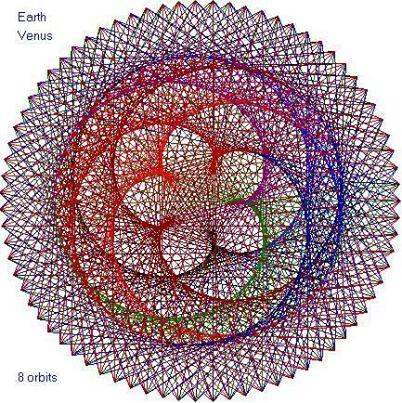
If you track the relative positions of Earth and Venus over an 8 year period, this is the resulting pattern. pic.twitter.com/oRbXDxVVIB
from the wonderful sharing world of Twitter
Friday, 1 November 2013
What is Nature's Shape? Does it have a shape? What's your favourite Shape? Do circles make you happy?
In MYP2 we are looking at patterns, and how to communicate what we see using the language of mathematics. This then becomes something we can use to make predictions.
Our Unit Question is "What is nature's shape?" Do you know?
Here is one of my favourite patterns and some of my favourite Mathematics.
Some of my students said "no! anything but Fibonacci" when I first mentioned patterns this year. That made my mathematical heart and soul ache with sadness for my students. There is so much incredible beauty in nature that can be communicated by the incredible versatility of Mathematics.
I hope this helps to spread the joy and curiosity
Here is the Vimeo Channel of their work.
And if you'd like to get deeper into how they made the video (using gorgeous mathematics) please check out the blog that goes with this video right here.
Our Unit Question is "What is nature's shape?" Do you know?
Here is one of my favourite patterns and some of my favourite Mathematics.
Some of my students said "no! anything but Fibonacci" when I first mentioned patterns this year. That made my mathematical heart and soul ache with sadness for my students. There is so much incredible beauty in nature that can be communicated by the incredible versatility of Mathematics.
I hope this helps to spread the joy and curiosity
Here is the Vimeo Channel of their work.
And if you'd like to get deeper into how they made the video (using gorgeous mathematics) please check out the blog that goes with this video right here.
Wednesday, 30 October 2013
Zombies and Relationships - will they last?
In MYP5 we are looking at the mathematical modelling of a Zombie Apocalypse and my sister, Michelle Griffin, posted this in facebook today
Charting 20 Years of Pop-Culture Witches, Zombies, and Vampires from Vulture (a very good read indeed)

And she also posted this very cool statistical study on relationships and predicting their outcomes (stay together or ...).
Here is the fascinating article about it from the New York Times
Charting 20 Years of Pop-Culture Witches, Zombies, and Vampires from Vulture (a very good read indeed)
And she also posted this very cool statistical study on relationships and predicting their outcomes (stay together or ...).
"It’s not in the stars after all. Instead, it seems, the shape of a person’s social network is a powerful signal that can identify one’s spouse or romantic partner — and even if a relationship is likely to break up"
Here is the fascinating article about it from the New York Times
 |
| Cameron Marlow/FacebookA graphical representation of one person’s network neighborhood on Facebook. |
Subscribe to:
Posts (Atom)